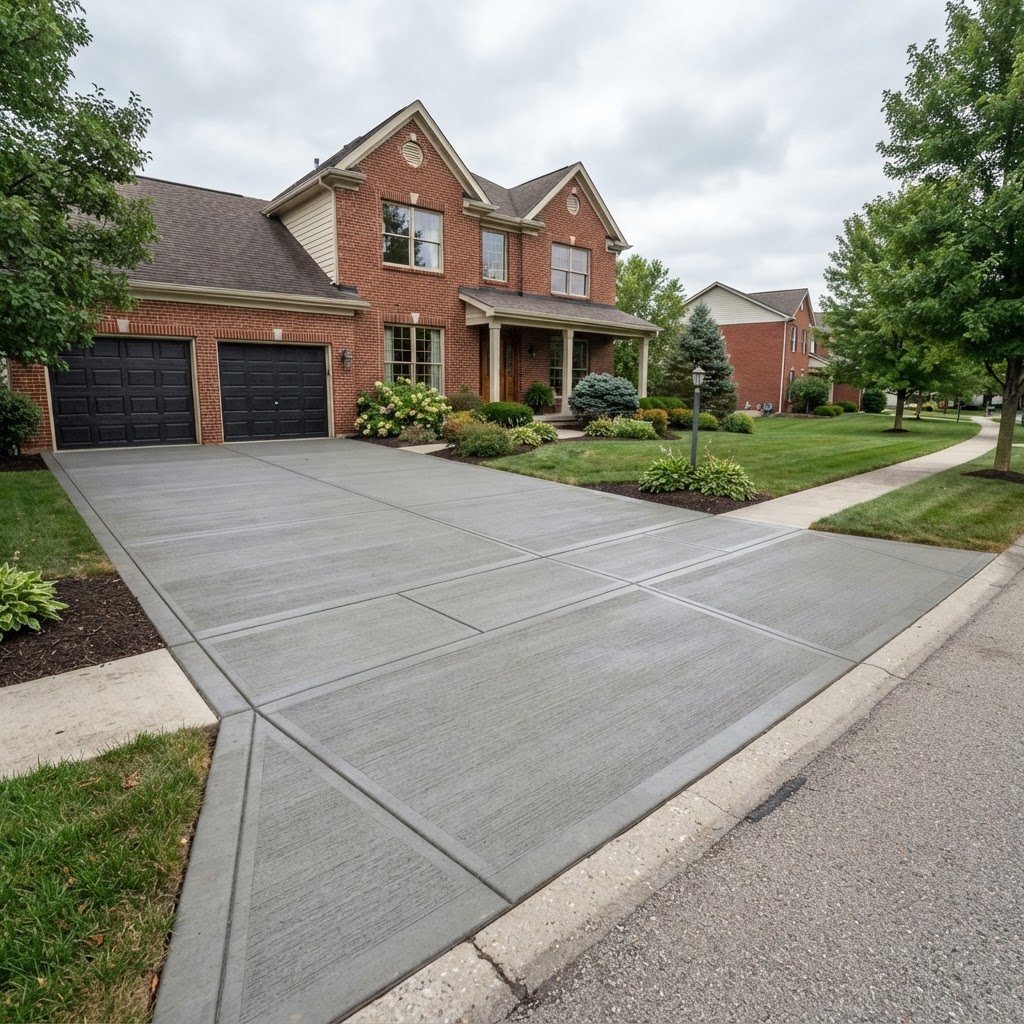
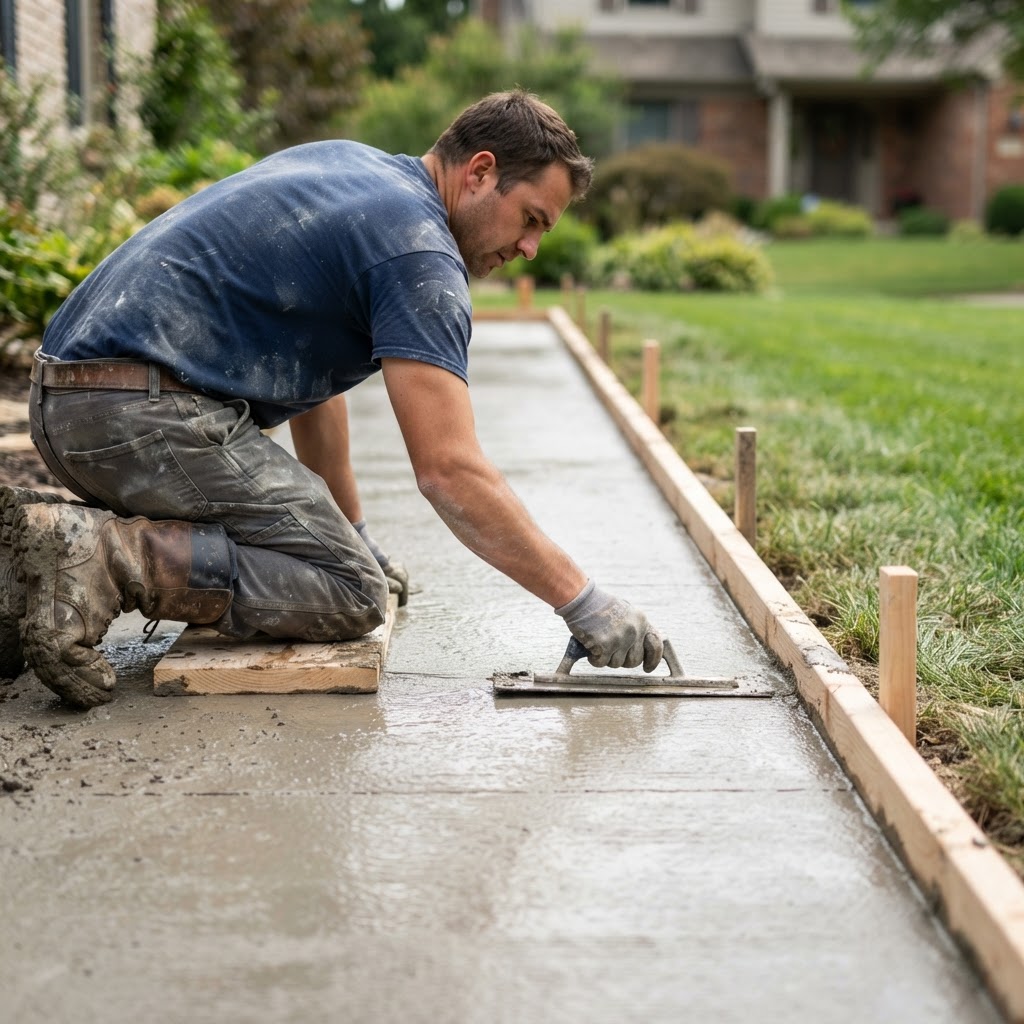
In a lot of Carmel neighborhoods, the driveway is the biggest piece of concrete on the lot and the first thing anyone sees. It also takes a beating: daily trips to work and school, delivery vans and landscape trailers, a few months of snow, ice and salt, and summer heat on top of that. A Carmel concrete driveway poured on a solid base with the right mix shrugs that off for decades. One poured thin over poorly compacted fill tends to start settling at the garage, cracking at the apron and flaking on the surface within a handful of winters.
Carmel Concrete Contractor connects homeowners with a vetted local concrete contractor for driveway projects across Carmel and Clay Township. Call (317) 798-0634 or use the form above for a free on-site estimate.
Driveway Replacement in Carmel's Established Neighborhoods
Many Carmel subdivisions were built out in the 1980s, 1990s and 2000s, and plenty of their original driveways are now at or near the end of their useful life. The signs are familiar: a slab that has dropped where it meets the garage floor, a cracked and tilted apron, surface flaking (scaling) from years of salt, or a crack pattern that keeps growing every spring.
A full replacement usually includes:
- Saw-cutting at the garage, walk and street so the new pour has clean edges
- Breaking out and hauling away the old concrete
- Digging out soft or wet material and adding compacted crushed stone
- Re-grading so water drains away from the house and garage
- Forms, reinforcement and pouring air-entrained concrete
- Broom finishing, jointing, curing and sealing
Ask that the estimate spell out demolition, haul-off and base work as line items. Those three are where bids that look similar at first glance usually differ.
New Concrete Driveway Installation
New installs come up with custom homes and teardown rebuilds, homes upgrading from asphalt, and detached garages or carriage houses that need a real approach. The process starts with excavation to firm subgrade, then grading, a compacted stone base, forms and reinforcement, the pour, finishing and joints. A typical residential driveway is poured around 4 inches thick. Many contractors go to 5 or 6 inches at the apron and anywhere a heavy truck, trailer or RV will park. Ask your contractor what they recommend and why.
Widening and Parking Pads
Two-car driveways that were fine when the house was built don't always suit a household with three drivers, or a boat, or a work truck. Widening adds a strip along one side or both, and a parking pad adds a dedicated spot off to the side. The new section should be doweled or pinned to the existing slab so the two move together, with joints that line up with the old pattern. New concrete will look lighter than the old at first. Weathering narrows the difference over time, but a perfect day-one match is rare. In HOA communities, widening is one of the changes most likely to need architectural approval, so check before you commit.
Driveway Aprons, Curbs and the Right-of-Way
The apron runs from the end of your driveway to the street, and on most Carmel lots part of it sits in the public right-of-way. Carmel takes its streets and curbs seriously, so apron and curb-cut work is the piece of a driveway job most likely to fall under City of Carmel requirements for thickness, slope or permitting. Your contractor should confirm the current rules before the pour. Lots in unincorporated pockets can fall under Hamilton County rules instead.
Finishes: Broom, Exposed Aggregate and Decorative Borders
- Broom finish: the standard. Good traction, easy to clean, easy to repair and match.
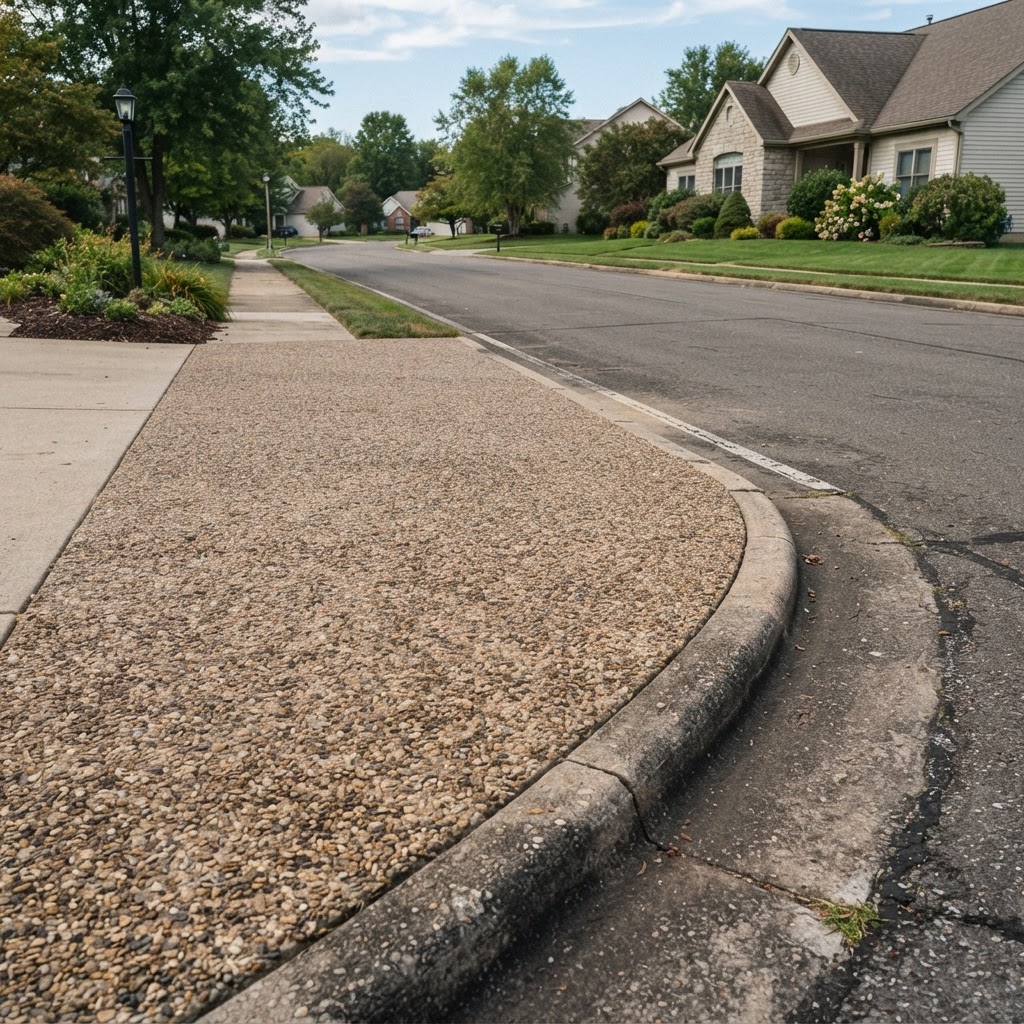
- Exposed aggregate: the top paste is washed away to reveal the stone. Grippy, hides tire marks, and popular on upscale Carmel streets.
- Stamped or colored borders: a broom-finish field framed by a stamped or colored band. A lot of curb appeal for less than stamping the whole driveway.
- Integral color: color mixed all the way through, so chips and wear don't expose gray.
A fully stamped driveway is possible, but it needs periodic resealing and can get slippery if the sealer is overapplied. Our stamped and decorative concrete page goes into the options.
Concrete Driveway Cost in Carmel
HomeGuide puts a concrete driveway at about $6 to $15 per square foot installed, or roughly $2,400 to $8,600 for a typical two-car driveway, with basic decorative driveways around $10 to $15 per square foot and high-end custom work at $20 to $25 or more. These are national figures, not Carmel quotes. What moves your number:
- Square footage and thickness
- Tear-out and disposal of the existing driveway
- Base stone and re-grading needed
- Truck access, or the need for a pump
- Apron and curb work in the right-of-way
- Finish, color, borders and sealing
Winter Care for a Carmel Driveway
- Go easy on salt the first winter. Use sand for traction while the concrete is young.
- Never use ammonium nitrate or ammonium sulfate deicers. They chemically attack concrete. Plain rock salt is gentler, but still wears the surface over the years.
- Watch what the plows push. City plows leave salty slush at the end of driveways. Shoveling it off the apron helps.
- Seal every few years with a penetrating sealer.
- Keep downspouts pointed away from the edges of the slab so water doesn't undermine the base.
Concrete or Asphalt?
Asphalt is usually cheaper to install and handles salt well, but it needs sealcoating every few years and typically has a shorter life. Concrete costs more up front, needs less routine maintenance, reflects heat instead of absorbing it, and with a good base can last for decades. In many Carmel HOAs, the covenants specify the driveway material, so check before you compare bids.
Concrete vs Asphalt (and Pavers) for Your Driveway
Most Carmel homeowners weigh concrete against asphalt, and some consider pavers. Each works; the right one depends on budget, looks and how much upkeep you want.
- Up-front cost: Concrete usually higher than asphalt; asphalt usually lower; pavers usually highest.
- Typical lifespan: Concrete often decades with good base and care; asphalt generally shorter than concrete; pavers long, with resetting over time.
- Maintenance: Concrete — occasional sealing, joint and crack care; asphalt — sealcoating every few years, crack filling; pavers — re-sanding joints, resetting settled pavers.
- Summer heat: Concrete stays cooler, light color; asphalt gets hot and can soften; pavers vary with color.
- Look: Concrete — clean, can be stamped or colored; asphalt — black, uniform; pavers — most decorative.
- Winter salt: Concrete can scale if unsealed and salted heavily; asphalt handles salt well; pavers vary by product.
Lifespans and prices vary widely with installation quality, base, traffic and climate, so treat these as general comparisons. Many HOAs in Hamilton County also limit which materials are allowed. For prices, see our concrete cost guide, or call (317) 798-0634 for a free quote.
Curing Time and How Long a Concrete Driveway Lasts
Fresh concrete gains strength over weeks. As a general guide, many contractors say light foot traffic is often fine after a day or two, cars after about a week, and heavy vehicles after longer, but always follow your contractor's instructions, since mix, weather and thickness change the timing.
Help it cure well:
- Keep it damp or use the curing compound your contractor applies
- Keep cars, trailers and dumpsters off until you're told it's ready
- Avoid de-icing salt the first winter
- Seal it when your installer says it's ready; see concrete sealing
How long will it last? A well-built concrete driveway on a good base can last for decades. What shortens its life: thin slabs, poor base, water running under the edges, heavy salt and heavy trucks. Cracks are normal to a degree; control joints are there so they happen in straight lines.
Frequently Asked Questions
Get a free driveway estimate in Carmel.
Call (317) 798-0634 or send the form, and a local driveway contractor will reach out to look at your project.